
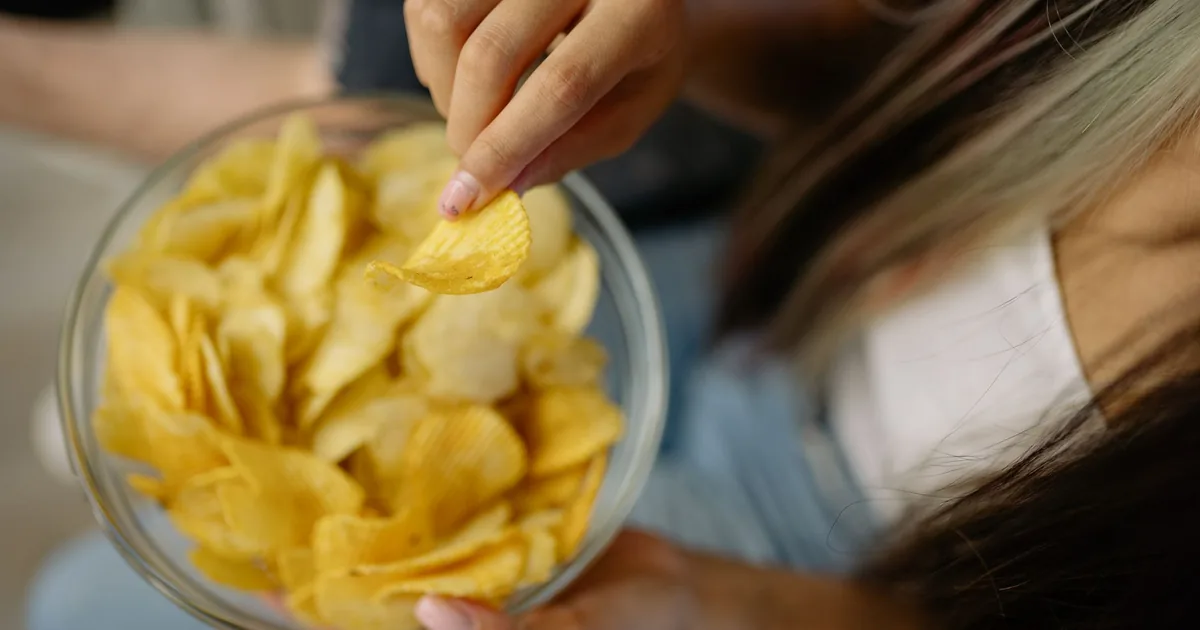
Match the calories and the nutrients, serve ultra-processed food, and people eat 508 kcal more a day.
They cannot tell. Their hunger scores came out the same.
Two diets, tested on people living in a hospital
In 2019 the US National Institutes of Health housed 20 adults in a hospital for two weeks at a time, giving them an ultra-processed diet in one block and a minimally processed diet in the other.
The two diets matched on calories, sugar, sodium, fiber and macronutrient ratio, and people ate as much as they wanted.
| After two weeks | Ultra-processed | Minimally processed |
|---|---|---|
| Daily intake | +508 kcal | Baseline |
| Body weight | +0.9 kg | −0.9 kg |
| Hunger and fullness scores | No difference | No difference |
Japan and the UK point the same way
In a 2024 Japanese study, nine men ate 814 kcal more a day during the ultra-processed block and gained 1.1 kg more. They also chewed noticeably less.
In a 2025 UK trial, 55 adults lost less weight on an ultra-processed diet even when it followed national dietary guidelines.
The culprit was chewing time
Ultra-processed food is soft and energy-dense. You can get the same calories in far faster.
The fullness signal arrives 15 to 20 minutes after you start eating, and the plate is empty before that.
Slowing down is easier than cutting ultra-processed food out. Put your fork down between bites, or put a sip of water between them.
The hard part is knowing what counts
- •Made with ingredients you do not keep at home: soy protein isolate, high-fructose corn syrup, emulsifiers
- •Designed to open and eat: chips, cup noodles, cereal bars
- •Canned beans, frozen vegetables and plain yogurt are not ultra-processed
You do not have to cut it all out
What caused trouble in these studies was ultra-processed food making up most of the diet.
Swap one meal for whole grains, vegetables and protein and the total for the day changes.
508 kcal is a bowl and a half of rice. Twenty people ate that much extra every day for two weeks and did not feel any fuller for it.
Sources · Hall et al., Cell Metabolism (2019) · Japanese replication study (2024) · UK randomized trial (2025)